Thank you for writing to us. One of our executive will reach back to you through your submitted medium. In case there’s an urgency, feel free to connect over WhatsApp for faster response.
Prefer calling? Dial +9108048032976 (international callers) or 08048032976 (Indian callers).
In the modern era of “Zero Liquid Discharge“ (ZLD) and high-purity chemical processing, the demand for efficient thermal separation has never been higher. As a premier Agitated Thin Film Dryer (ATFD) Manufacturer, RAJ Process delivers cutting-edge evaporation solutions engineered to handle the most complex, heat-sensitive, and high-viscosity fluids.
Our systems are designed to maximize heat transfer, minimize residence time, and ensure that even the most difficult-to-handle slurries are converted into high-quality solids or concentrated liquids.
1. Understanding ATFD Technology: The Science of Thin Films
An Agitated Thin Film Dryer (ATFD) is a vertical or horizontal thermal separation unit. Unlike traditional evaporators where the liquid sits in a vessel or flows through tubes, the ATFD uses mechanical agitation to create a highly turbulent, thin film of product against a heated jacketed wall.
How the Process Works
Feed Entry: The liquid or slurry enters the top of the cylindrical heating jacket.
Thin Film Formation: A high-speed rotor with specialized blades spreads the liquid into a thin film (typically 0.5 to 2 mm thick) across the internal heated surface.
Rapid Evaporation: Because the film is so thin, the heat transfer is near-instantaneous. Vapors travel upward through a mist eliminator.
Solid Recovery: As the moisture evaporates, the material transitions from a liquid to a paste, and finally into a dry powder or flakes, which are discharged at the bottom.
2. Technical Specifications & Performance Chart
Our ATFD units are custom-built to match the thermal sensitivity of your specific product. Below is the standard technical roadmap for our high-performance systems.
3. Specialized Rotor Blade Configurations
The “heart“ of an ATFD is its rotor. Depending on whether your material is sticky, abrasive, or heat-sensitive, we offer four distinct blade configurations to optimize your yield:
A. Fixed Blade Rotor
Best For: Low to medium viscosity liquids.
Mechanism: Maintains a precise, fixed clearance between the blade tip and the heated wall. It is ideal for continuous, high-speed evaporation of stable solutions.
B. Cylindrical Wiper Rotor
Best For: Highly viscous fluids and concentration tasks.
Mechanism: Uses wipers to physically “wipe“ the film across the surface, preventing any stagnant “hot spots“ that could degrade the product.
C. Spring-Loaded Rotor
Best For: Products that tend to scale or form a hard crust on the walls.
Mechanism: The blades are pushed against the wall by spring tension, ensuring the heating surface stays clean and heat transfer remains at 100% efficiency throughout the run.
D. Centrifugal Blade Rotor
Best For: Slurries with high solids content.
Mechanism: Utilizes centrifugal force to press the blades outward. As the product thickens, the blades adapt to the changing resistance, making it the most versatile option for multi-product plants.
4. Key Advantages of Using ATFD Systems
Zero Liquid Discharge (ZLD) Compliance
In today’s regulatory environment, industrial plants are under pressure to eliminate wastewater. Our ATFDs act as the final stage of a ZLD plant, taking the “reject“ from Reverse Osmosis (RO) or Multi-Effect Evaporators (MEE) and turning it into dry, disposable salt or reusable solids.
Minimal Residence Time
Traditional evaporators can subject a product to heat for hours. In an ATFD, the residence time is measured in seconds. This is critical for pharmaceuticals, flavors, and enzymes that would otherwise lose their potency or change color if exposed to heat for too long.
Single-Pass Operation
Our technology allows for a “liquid-in, powder-out“ transition in a single pass. This eliminates the need for separate thickeners, centrifuges, or secondary dryers, significantly reducing your plant's footprint and capital expenditure.
5. Industrial Applications Across Sectors
Pharmaceutical & Biotech
Concentrating APIs: Gentle handling of active pharmaceutical ingredients.
Solvent Recovery: Efficiently separating high-value solvents from waste streams.
Herbal Extracts: Maintaining the bio-activity of natural extracts during concentration.
Chemical & Petrochemical
Dye & Pigment Concentration: Achieving high-purity colorants.
Agrochemicals: Drying pesticides and fertilizers into stable powder forms.
Resin Processing: Handling high-viscosity polymers without clogging.
Food & Beverage
Dairy Products: Concentrating whey and milk derivatives.
Fruit Pulps: Reducing volume for transport while preserving nutritional integrity.
Sweeteners: Processing sugar alcohols and corn syrup.
6. Engineering Excellence: Why RAJ Process?
Choosing the right ATFD manufacturer is about more than just buying a machine; it’s about process reliability. We provide:
Custom Simulation: We use thermal modeling to calculate the exact surface area required for your specific mass balance.
Design Standard
ASME Sec VIII Div 1, Good Manufacturing Practice (GMP)
A silo is a specialized structure for storing bulk materials such as grain, coal, cement, carbon black, wood chips, and food products. Storage silos are essential equipment in manufacturing, agriculture, mining, and food processing industries.
Raj Process is a leading manufacturer of storage silos in India, offering durable and efficient designs tailored to meet the specific needs of diverse industries. Built with high quality materials and advanced manufacturing techniques, our silos are engineered to withstand harsh industrial environments while ensuring product safety and quality.
Storage Silo Solutions
Raj Process silos are designed to prevent contamination and maintain product integrity. With expertise in spray drying and powder handling, we also provide advanced egg powder production plants capable of drying whole egg, yolk, and albumen. To ensure optimal product quality, separate dryers are recommended for each product type.
Typical Applications
Foodstuffs and flour silos
Chemical silos
Coal silos
Cement and fly ash silos
Grain silos
Ceramic powder silos
Features
Available in bolted, smooth wall, and welded designs
Material options: epoxy coated carbon steel, stainless steel, carbon steel with stainless steel cladding, carbon steel with FRP coating
Designed for durability and safe operation under demanding conditions
Customizable to integrate seamlessly into existing process setups
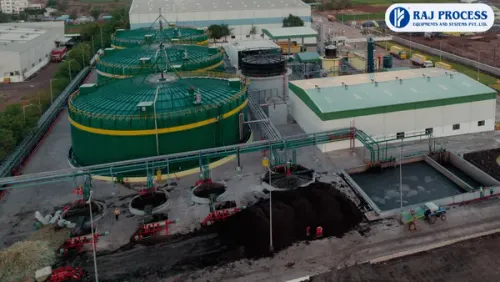
Raj Process Equipments & Systems Pvt. Ltd. is a pioneer in compressed biogas (CBG) technology, offering patented solutions for biogas generation and purification. As one of India’s leading CBG plant manufacturers, we deliver turnkey systems that convert organic waste into high purity compressed biogas — a sustainable, eco friendly fuel for the future.
Aligned with national initiatives like SATAT and GOBARdhan, Raj Process is driving India’s clean energy transition by designing and executing next generation CBG plants across the country and globally.
Organic Waste In. Clean Fuel and Fertilizer Out.
Compressed Biogas — commonly called Bio-CNG — is biomethane produced from the anaerobic digestion of organic waste, purified to 96–99% methane purity, and compressed to 200–250 bar for dispensing and sale. It is chemically identical to fossil CNG in energy value, calorific content, and physical properties. Every CNG vehicle on the road can run on CBG without any modification. Every existing CNG dispensing station is compatible.
The process, in simple terms:
Organic waste enters a sealed, temperature-controlled digester. Over 15–25 days, a carefully managed consortium of microorganisms breaks it down and produces raw biogas — typically 55–65% methane and 35–40% CO₂. This raw biogas passes through our cleaning and upgrading systems, where CO₂, hydrogen sulphide, moisture, and trace contaminants are removed. What remains is biomethane meeting IS 16087:2023 specifications. We compress it, store it in high-pressure cascade systems, and it is ready for sale to Oil Marketing Companies or direct consumers.
The digestate — the solid and liquid material remaining after digestion — is not waste. It is a nutrient-rich Fermented Organic Manure (FOM) and bio-slurry that sells as a premium organic fertilizer, adding a second revenue stream to your plant from day one.
One plant. One waste problem solved. Two revenue streams generated. That is the CBG business model.
FEEDSTOCKS
The feedstock landscape for CBG production in India is broad. We have designed and commissioned plants running on:
Napier grass and dedicated energy crops
Press mud from sugar mills
Cattle and cow dung
Distillery spent wash — molasses based and grain-based
Municipal solid waste (organic fraction)
Poultry litter
Food processing effluents
Fruit and vegetable market waste
Rice straw and wheat straw
Sugarcane trash and bagasse
Sewage sludge
Biogas yields across these feedstocks range from 30 m³ per tonne for cattle dung to 350–400 m³ per tonne for high-fat food waste. The differences are not just in yield — each feedstock brings its own pre-treatment requirements, C:N ratio considerations, sulphur loading, and digester design implications.
Premium Spray Drying Solutions: Engineering Excellence by Raj Process
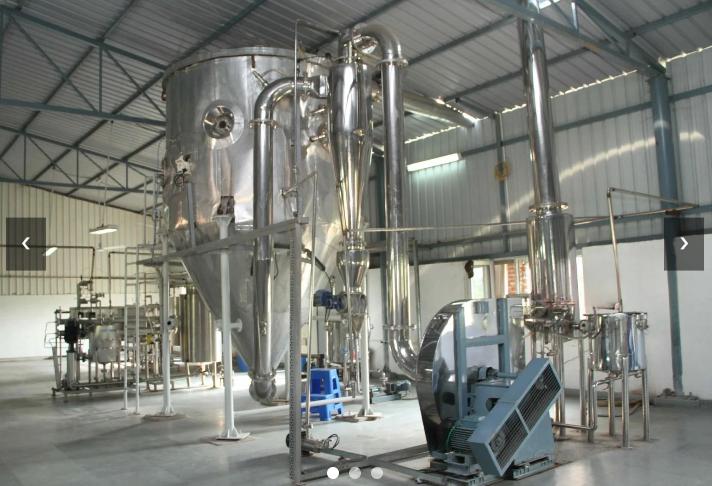
In the landscape of industrial thermal processing, Raj Process has solidified its reputation as the premier spray dryer manufacturer in India. Our systems represent the pinnacle of liquid-to-powder conversion technology, offering unparalleled efficiency for diverse industrial sectors.
The Science of Spray Drying: How It Works
Spray drying is a sophisticated method of producing a dry powder from a liquid or slurry by rapidly drying with a hot gas. It is the preferred method for thermally sensitive materials because the drying process is near-instantaneous.
The process follows four fundamental stages:
Atomization: The liquid feed is turned into tiny droplets using a nozzle or rotary atomizer.
Spray-Air Contact: The droplets meet a stream of hot air.
Drying: Moisture evaporates instantly, cooling the particle as it dries.
Separation: The dry powder is recovered from the exhaust air using cyclones or bag filters.
Technical Specifications & Capacity
At Raj Process, we engineer systems that scale with your business. Whether you are in a R&D phase or high-volume industrial production, our equipment is built to perform.
Key Features of Raj Process Spray Dryers
1. Advanced CIP (Cleaning-In-Place) Systems
Hygiene is non-negotiable in pharmaceutical and food processing. Our integrated CIP systems provide:
Automated Cycles: Thorough cleaning without dismantling the machinery.
Cross-Contamination Prevention: Essential for facilities handling multiple product lines.
Reduced Downtime: Faster transitions between product batches.
2. Versatile Feed Handling
Our nozzles and atomizers are designed to handle various feed types:
Solutions: Clear liquids with dissolved solids.
Slurries: Thick, high-viscosity liquids with suspended solids.
Emulsions: Mixtures of immiscible liquids (like oil and water).
3. Precision Control
We utilize advanced PLC-based control systems to monitor inlet/outlet temperatures and feed rates, ensuring a consistent particle size distribution for every batch.
Industrial Applications: Where Precision Meets Scale
As leading manufacturers, we serve a massive spectrum of industries. Below is a detailed breakdown of how our spray dryers are utilized:
Food & Dairy
Milk Powder: Transforming fresh milk into shelf-stable powders while preserving nutritional value.
Fruit Pulps: Creating instant fruit powders for beverages and baking.
Flavors: Encapsulating volatile flavor oils to extend shelf life.
Pharmaceuticals & Biotechnology
Herbal Extracts: Processing sensitive botanicals into concentrated, easy-to-dose powders.
Enzymes: Gentle drying to maintain biological activity.
API Processing: Precise particle engineering for drug delivery.
Chemical & Mineral
Detergents: Large-scale production of uniform, free-flowing washing powders.
Ceramics & China Clay: Preparing fine powders for high-quality molding and glazing.
Dyestuffs: Ensuring consistent color strength and solubility.
Why Choose Raj Process?
Choosing the right spray dryer manufacturer in India is a long-term investment. Raj Process offers:
Custom Engineering: Every system is tailored to the specific thermal sensitivity and viscosity of your product.
Energy Efficiency: Optimized heat recovery systems to reduce operational costs.
Durability: High-grade stainless steel construction (SS316/SS304) for longevity and compliance.