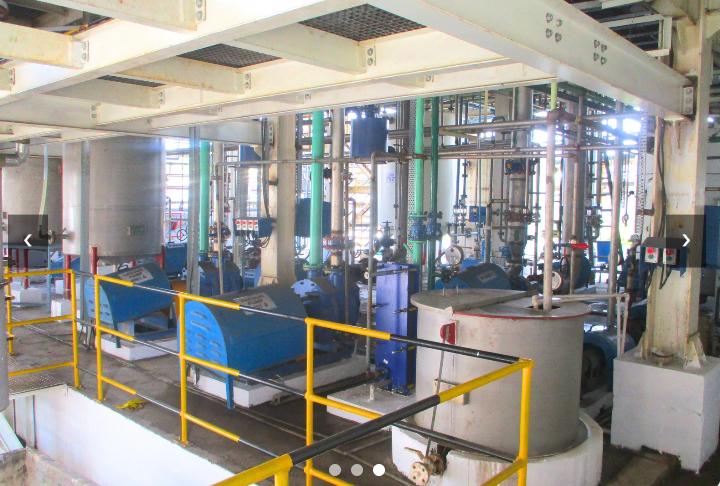
In the modern era of “Zero Liquid Discharge“ (ZLD) and high-purity chemical processing, the demand for efficient thermal separation has never been higher. As a premier Agitated Thin Film Dryer (ATFD) Manufacturer, RAJ Process delivers cutting-edge evaporation solutions engineered to handle the most complex, heat-sensitive, and high-viscosity fluids. Our systems are designed to maximize heat transfer, minimize residence time, and ensure that even the most difficult-to-handle slurries are converted into high-quality solids or concentrated liquids. 1. Understanding ATFD Technology: The Science of Thin Films An Agitated Thin Film Dryer (ATFD) is a vertical or horizontal thermal separation unit. Unlike traditional evaporators where the liquid sits in a vessel or flows through tubes, the ATFD uses mechanical agitation to create a highly turbulent, thin film of product against a heated jacketed wall. How the Process Works Feed Entry: The liquid or slurry enters the top of the cylindrical heating jacket. Thin Film Formation: A high-speed rotor with specialized blades spreads the liquid into a thin film (typically 0.5 to 2 mm thick) across the internal heated surface. Rapid Evaporation: Because the film is so thin, the heat transfer is near-instantaneous. Vapors travel upward through a mist eliminator. Solid Recovery: As the moisture evaporates, the material transitions from a liquid to a paste, and finally into a dry powder or flakes, which are discharged at the bottom. 2. Technical Specifications & Performance Chart Our ATFD units are custom-built to match the thermal sensitivity of your specific product. Below is the standard technical roadmap for our high-performance systems. 3. Specialized Rotor Blade Configurations The “heart“ of an ATFD is its rotor. Depending on whether your material is sticky, abrasive, or heat-sensitive, we offer four distinct blade configurations to optimize your yield: A. Fixed Blade Rotor Best For: Low to medium viscosity liquids. Mechanism: Maintains a precise, fixed clearance between the blade tip and the heated wall. It is ideal for continuous, high-speed evaporation of stable solutions. B. Cylindrical Wiper Rotor Best For: Highly viscous fluids and concentration tasks. Mechanism: Uses wipers to physically “wipe“ the film across the surface, preventing any stagnant “hot spots“ that could degrade the product. C. Spring-Loaded Rotor Best For: Products that tend to scale or form a hard crust on the walls. Mechanism: The blades are pushed against the wall by spring tension, ensuring the heating surface stays clean and heat transfer remains at 100% efficiency throughout the run. D. Centrifugal Blade Rotor Best For: Slurries with high solids content. Mechanism: Utilizes centrifugal force to press the blades outward. As the product thickens, the blades adapt to the changing resistance, making it the most versatile option for multi-product plants. 4. Key Advantages of Using ATFD Systems Zero Liquid Discharge (ZLD) Compliance In today’s regulatory environment, industrial plants are under pressure to eliminate wastewater. Our ATFDs act as the final stage of a ZLD plant, taking the “reject“ from Reverse Osmosis (RO) or Multi-Effect Evaporators (MEE) and turning it into dry, disposable salt or reusable solids. Minimal Residence Time Traditional evaporators can subject a product to heat for hours. In an ATFD, the residence time is measured in seconds. This is critical for pharmaceuticals, flavors, and enzymes that would otherwise lose their potency or change color if exposed to heat for too long. Single-Pass Operation Our technology allows for a “liquid-in, powder-out“ transition in a single pass. This eliminates the need for separate thickeners, centrifuges, or secondary dryers, significantly reducing your plant's footprint and capital expenditure. 5. Industrial Applications Across Sectors Pharmaceutical & Biotech Concentrating APIs: Gentle handling of active pharmaceutical ingredients. Solvent Recovery: Efficiently separating high-value solvents from waste streams. Herbal Extracts: Maintaining the bio-activity of natural extracts during concentration. Chemical & Petrochemical Dye & Pigment Concentration: Achieving high-purity colorants. Agrochemicals: Drying pesticides and fertilizers into stable powder forms. Resin Processing: Handling high-viscosity polymers without clogging. Food & Beverage Dairy Products: Concentrating whey and milk derivatives. Fruit Pulps: Reducing volume for transport while preserving nutritional integrity. Sweeteners: Processing sugar alcohols and corn syrup. 6. Engineering Excellence: Why RAJ Process? Choosing the right ATFD manufacturer is about more than just buying a machine; it’s about process reliability. We provide: Custom Simulation: We use thermal modeling to calculate the exact surface area required for your specific mass balance.

Jakarta
08048032972


