
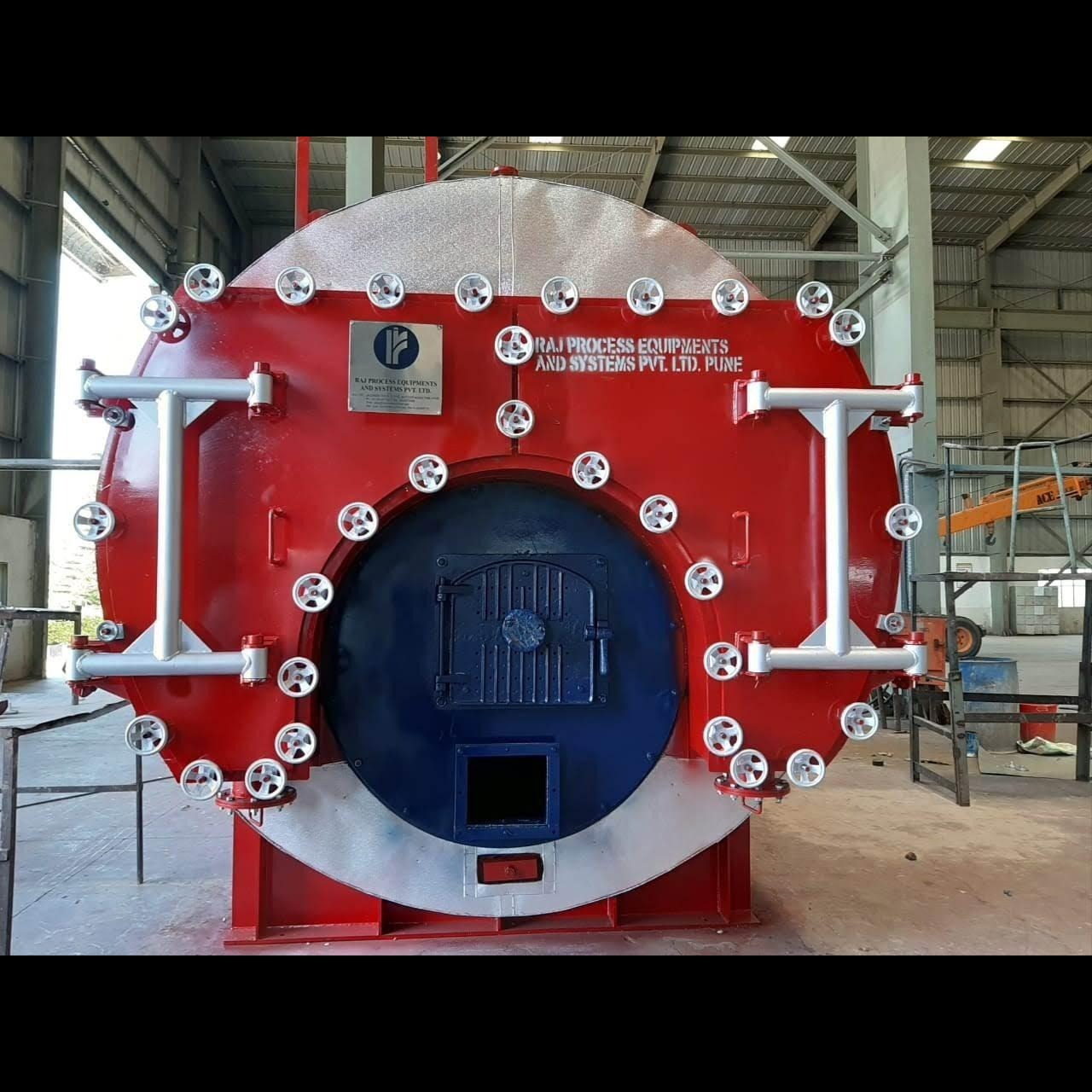
A fire tube boiler is a boiler in which hot flue gases pass through tubes surrounded by water. Heat transfers through the tube walls to generate steam.
1. Construction
• Shell – Pressure vessel containing water.
• Furnace – Fuel combustion chamber.
• Fire Tubes – Carry hot flue gas.
• Smoke Box – Collects flue gas.
• Chimney – Discharges flue gas.
• Mountings – Safety valve, steam stop valve, pressure gauge, water level indicator, feed check valve, blowdown valve.
2. Working Principle
• Fuel burns in the furnace. Hot gases flow through fire tubes, transferring heat to surrounding water. Steam is generated and flue gas exits through the chimney.
3. Features
• Simple construction
• Low-pressure operation
• Low initial cost
• Easy operation and maintenance
4. Advantages
• Compact design
• High water storage/steam flexibility.
• Reliable for small/medium capacities
• Lower maintenance cost
5. Limitations
• Not suitable for very high pressure
• Slower steam raising
• Lower efficiency than water tube boilers
6. Applications
• Food processing
• Textile mills
• Rice mills
• Pharma industry
• Chemical Industry.
• Small process industries
7. Fire Tube vs Water Tube
Parameter Fire Tube Water Tube
Fluid Gas in tubes Water in tubes
Pressure Low High
Capacity Low-Medium High
Efficiency Lower Higher
Construction Simple Complex